From the Megaproject That Never Was to the Biological Corridor
By: Marco Villegas
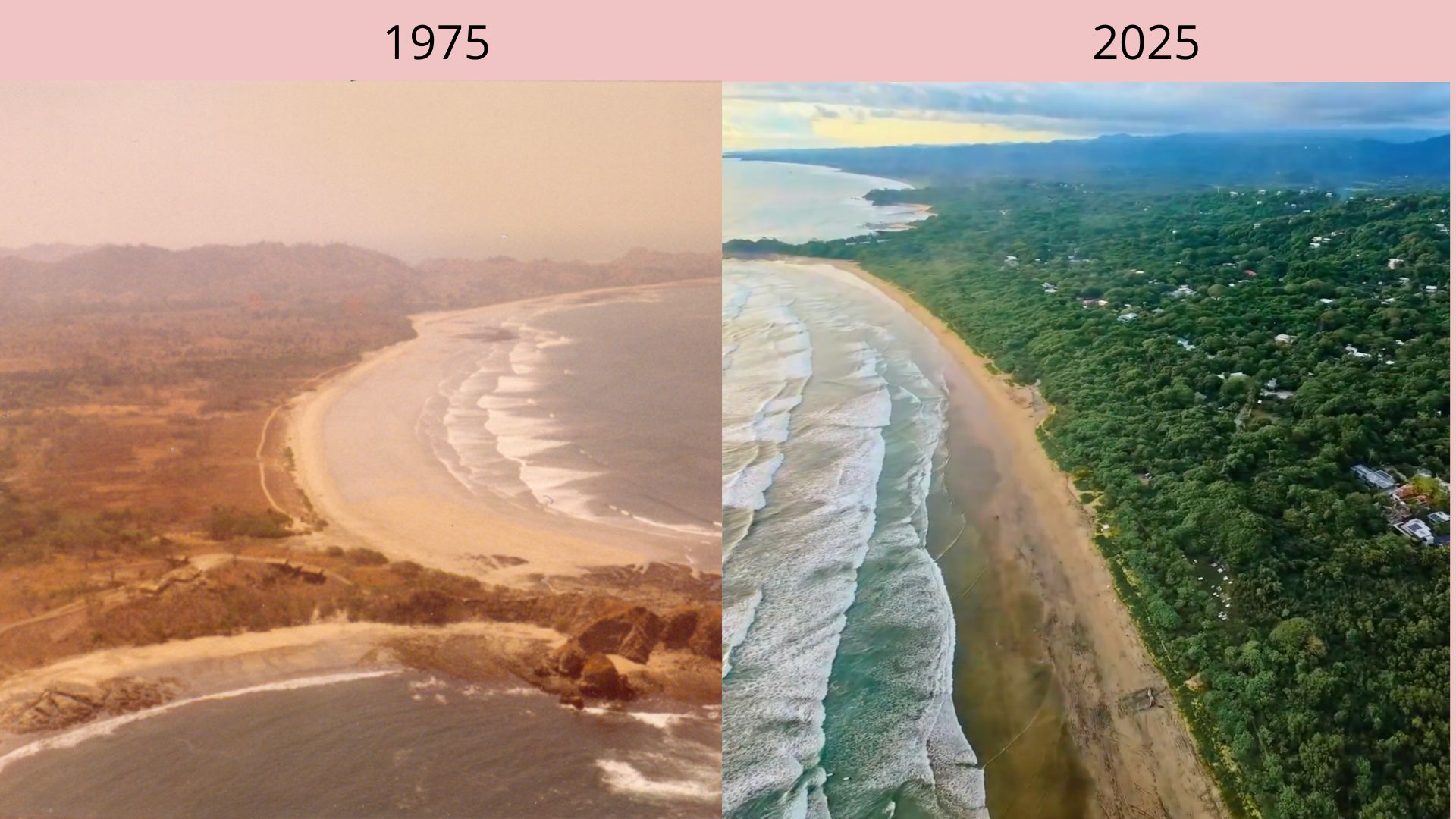
Long before becoming an international destination, Nosara was part of an older history of territorial exploitation in Costa Rica.
During the 19th century, much of the region was tied to the vast landholdings known as the “Nicoya Estate,” associated with large concessions granted to Minor Keith, a pioneer of the banana republic model and foreign investment, at a time when the Costa Rican state actively promoted the economic occupation of peripheral territories.
At the time, the value of the land was tied primarily to extraction: timber, cattle ranching, and agricultural expansion. Large areas of tropical forest were converted into pastureland and productive landscapes, including Nosara through Hacienda Baltodano.
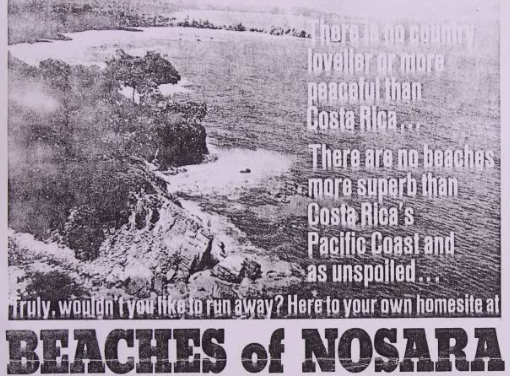
Decades later, part of those former pasturelands would become the site of the proposed “Playas de Nosara” or “Beaches of Nosara” megaproject, an ambitious tourism development promoted in the 1970s that envisioned urbanization, infrastructure, and golf courses along the coast.
But at the same time, something else was beginning to emerge.
In November 1970, Mario Boza, one of the founding figures of Costa Rica’s national park system and then head of the National Parks Department, officially warned about the extraordinary ecological value of Nosara Beach and its mass sea turtle nesting events.
In a memorandum dated November 11, 1970, Dr. Boza stated that:
“this beach, or a section of it, should be declared a biological reserve in order to preserve and protect this extremely valuable natural resource.”
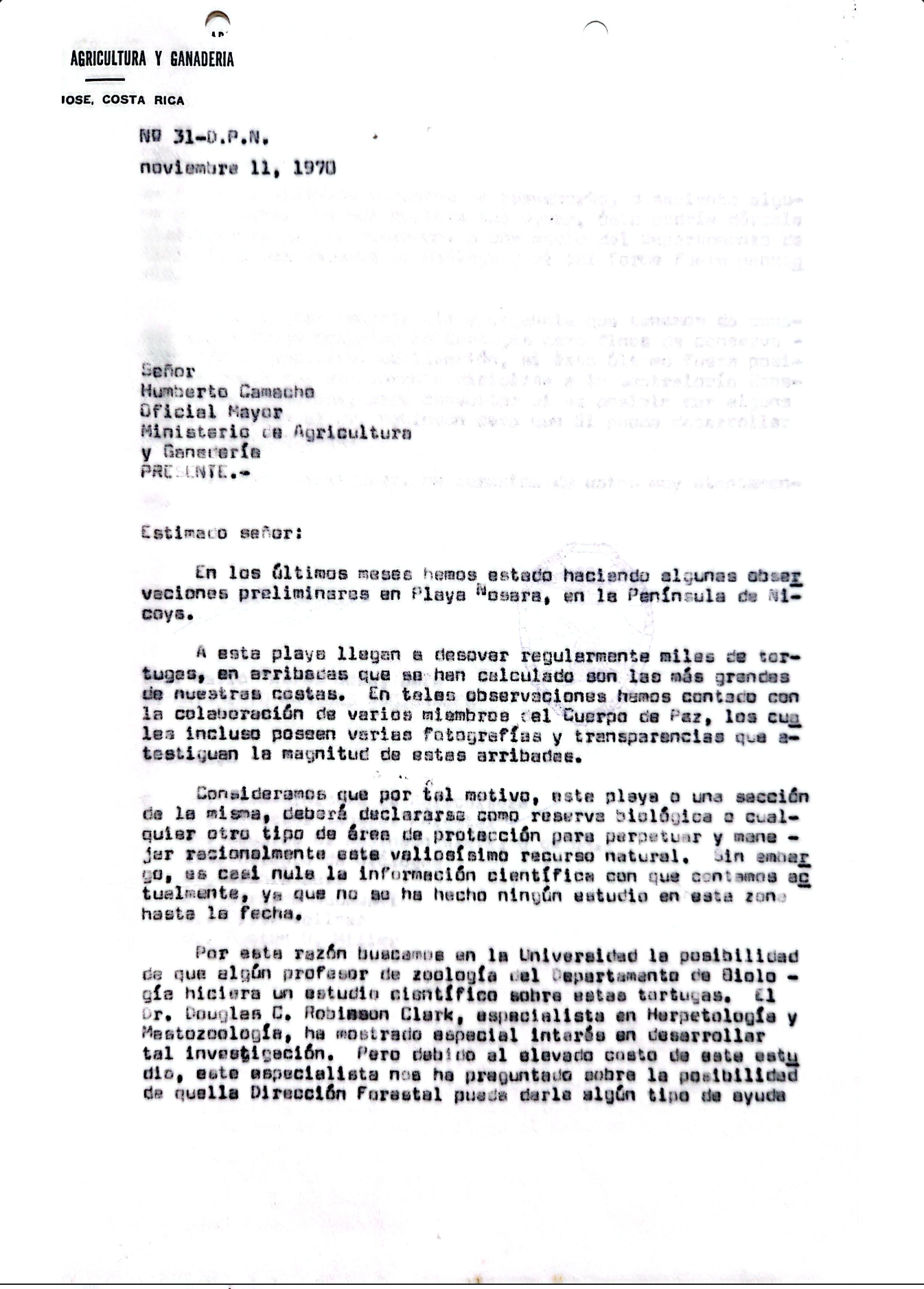
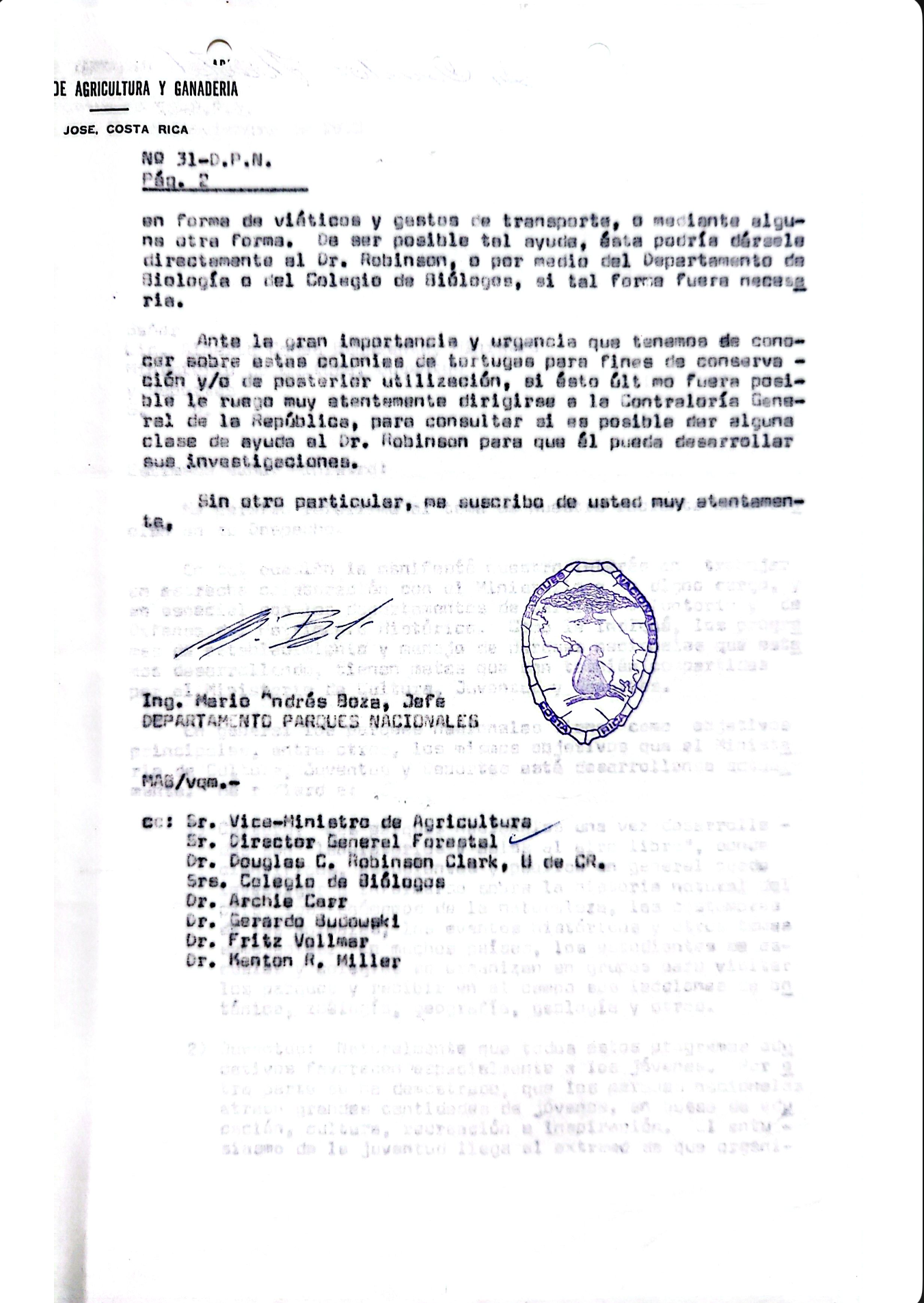
The conversation around conservation and development in Nosara has been going on for more than half a century.
And the story took an unexpected turn.
The original megaproject was never fully realized as it had been conceived. The developer eventually left the country, leaving behind a trail of uncertainty and an unregistered project that never materialized as planned.
Over the decades, as the land gradually shifted from cattle ranching to residential and tourism use, much of that former landscape regenerated naturally. The forest grew back. Rivers continued connecting the mountains to the ocean. Wildlife remained. And the sea turtles, thanks to organized community efforts, kept returning.
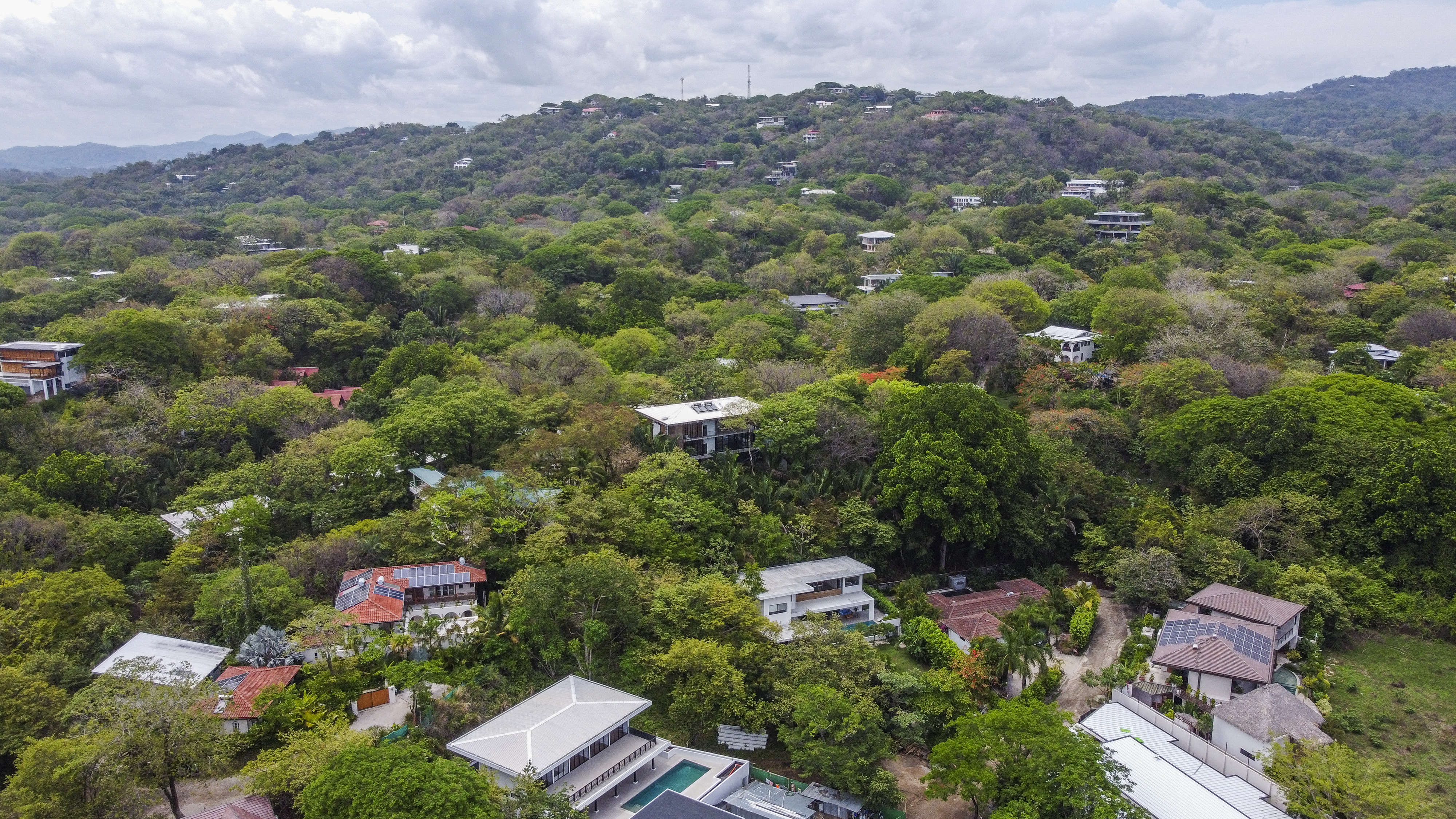
Today, Nosara has more than 80% forest cover, something extraordinary for a coastal territory under such intense real estate pressure.
And the beaches once imagined as part of a massive tourism development are now part of the Ostional National Wildlife Refuge, one of the few protected coastal areas under this category in all of Guanacaste.
In addition, that refuge is complemented and strengthened by the private reserve promoted by NCA, which is part of Costa Rica’s network of private nature reserves, a vast network that protects more than 6% of the country’s total protected areas. Today, NCA protects more than 652 acres of forest and maintains over 12 kilometers of free public trails, open to the entire community in the area experiencing the greatest development pressure in Nosara.
These trails now cross through the very same areas where oceanfront golf courses were once imagined decades ago. Today, they are used daily by families, tourists, workers, and above all, wildlife.
Since its founding in 1975, NCA had already established among its objectives “the protection and conservation of the region’s flora and fauna” “seeking to maintain ecological balance,” as well as “the preservation of Nosara’s scenic beauty.”
We are talking not only about Nosara’s conservation association, but about one of Costa Rica’s earliest community-based conservation organizations.
But the story of conservation in Nosara also evolved alongside the territory itself.
Nosara has changed profoundly. Today, it faces intense real estate pressure, inequality, and state abandonment.
Precisely because of this, protecting forests, water, and community access has become more urgent than ever. Property values skyrocketed, especially in the post-pandemic period, long before territorial planning mechanisms were capable of responding to the speed of growth. Real estate pressure began progressively fragmenting the landscape, transforming the forest into one of the destination’s most valuable assets.
And there, an unexpected paradox emerged.
The same developers, investors, and high-end property buyers have come to understand something fundamental: if the forest disappears, Nosara loses the very landscape, biodiversity, and identity for which millions of dollars are being invested in the territory.
In other words, the forest stops being seen as an obstacle to development and instead becomes a shield of value for the destination itself.
In response to this new territorial reality, Nosara began developing new forms of conservation. Today, the Nosara Wildlife Corridor has become the first biological corridor in the province of Guanacaste sustained entirely through voluntary conservation agreements between private landowners.
Through ecological easements registered in Costa Rica’s National Registry, landowners and developers establish permanent legal protection mechanisms to ensure that these forests can never be cleared.
That model represents something unusual in Costa Rica: a conservation strategy built within one of the most pressured real estate markets in Central America, not outside of it.
Because the story is still being written.
The very nature that managed to survive and regenerate helped turn Nosara into one of the most sought-after territories in Costa Rica. Urban growth, global tourism, and the rapid fragmentation of the landscape continue to place increasing pressure on forests, water, and ecological connectivity.
And there, the deeper question reappears:
Can conservation grow at the same pace as development?
Perhaps that is one of the most important environmental questions Costa Rica will face in the coming decades. And perhaps that is why, today more than ever, the story of Nosara is also a story of conservation that the country should be watching very closely.
Nosara grows.
Conservation grows too.


Leave a Reply